Why Live Streaming Continues to Change Digital Content
Live streaming has become one of the most direct ways to connect with an audience online. Unlike traditional recorded content, livestreaming gives viewers the opportunity to experience something as it happens, creating a sense of immediacy that is difficult to replicate with edited videos or static posts.
From creators and entertainers to educators, businesses, gamers, and public figures, more people are using live video to communicate with audiences in real time.
Live Content Feels More Personal
One of the biggest advantages of livestreaming is the connection it creates between the host and the audience.
Viewers can watch events unfold in real time, react to what is happening, and participate through live chat and other interactive features. Even a simple conversation can feel more engaging when the audience knows they are watching and participating at the same moment.
That real-time element can make livestreams feel less like traditional media and more like an experience shared between the creator and their audience.
There Is No Single Type of Livestream
Live streaming is not limited to gaming or social media personalities.
Creators can use live video for interviews, podcasts, educational sessions, product demonstrations, performances, comedy, sports, behind-the-scenes content, discussions, Q&A sessions, and special events.
The format can be as simple or as produced as the creator wants.
A creator sitting down for a conversation can be just as compelling as a professionally produced event if the subject and audience are right.
Interaction Is Part of the Experience
A major difference between live and recorded content is audience participation.
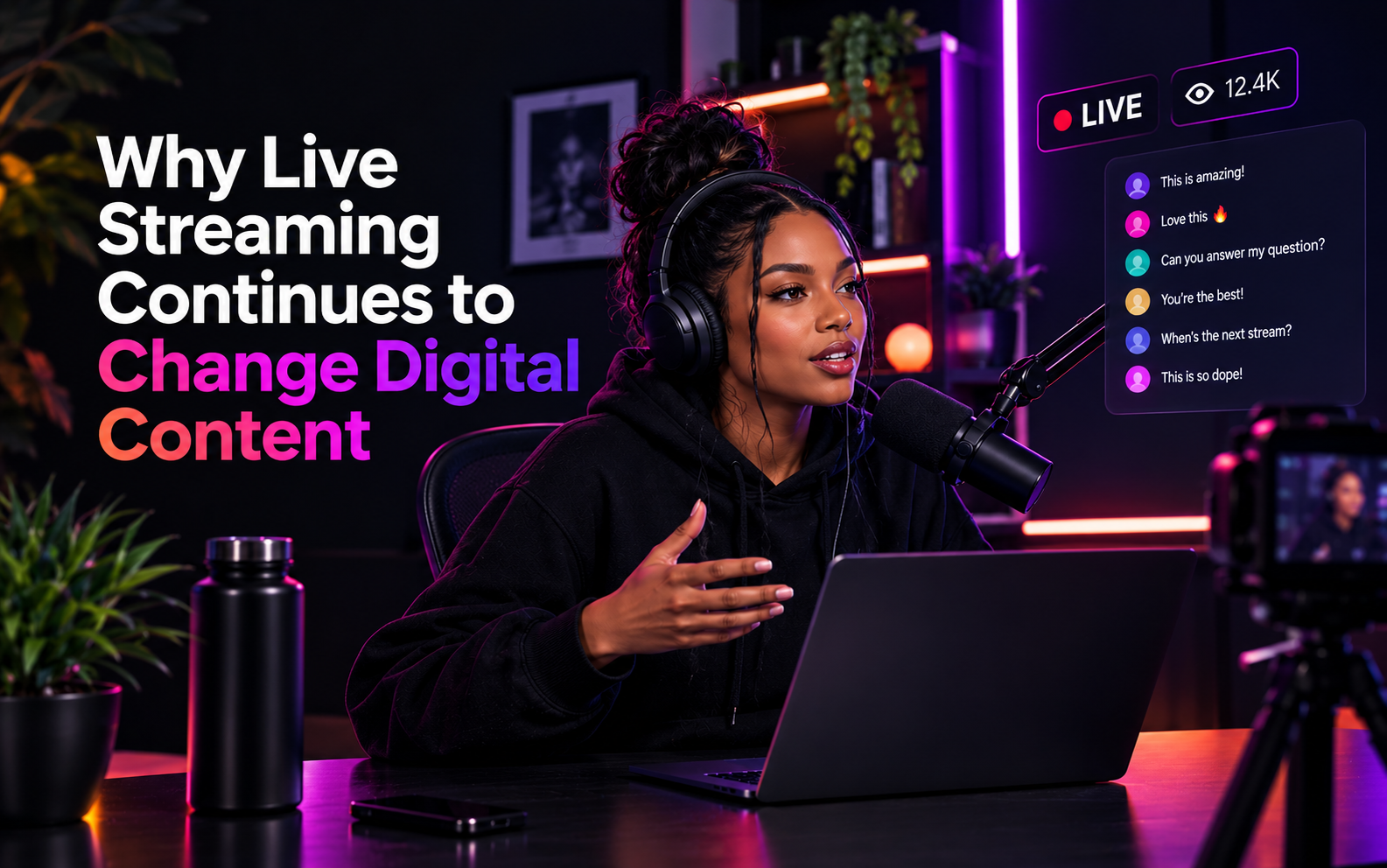
Live chat allows viewers to react, ask questions, share opinions, and communicate with the host while the broadcast is happening. This can turn viewers from passive spectators into active participants.
Creators can build segments around audience questions, respond to comments, take requests, or allow viewers to influence parts of the broadcast.
That interaction gives audiences another reason to return for future livestreams.
Consistency Matters
A successful livestream does not necessarily need to be complicated.
Having a consistent schedule can help audiences know when to return. Creators can also establish recurring formats, such as weekly conversations, gaming sessions, educational broadcasts, interviews, or live discussions.
At the same time, occasional special events can create something different from a creator's normal content.
The important thing is giving viewers a clear understanding of what they can expect when they join a livestream.
Technology Has Made Going Live Easier
The technical barrier to livestreaming has also become much lower.
Creators can broadcast using computers, cameras, microphones, streaming software, and mobile devices. Tools such as OBS allow creators to combine cameras, screens, graphics, audio, and other sources into a single live production.
This means creators can start with a relatively simple setup and improve their production as their audience grows.
Good lighting, clear audio, a reliable internet connection, and a stable streaming setup can make a significant difference in the viewing experience.
The Future of Live Streaming
Live streaming continues to expand beyond traditional social media platforms. Creators are looking for new ways to build direct relationships with their audiences and create experiences around their content.
Platforms such as BLIXE are built specifically around live digital events, giving creators another option for hosting and sharing livestream experiences with their audiences.
Whether the goal is entertainment, education, conversation, gaming, or a special event, live video gives creators a way to bring audiences into the moment.
As digital content continues to evolve, livestreaming will remain an important part of how people communicate, entertain, teach, and connect online.