Why Livestreaming Is Becoming the Future of Online Events
Livestreaming has changed the way people watch, discover, and participate in events. What was once mainly associated with gaming and social media has become a powerful way for creators, musicians, podcasters, businesses, and event organizers to reach audiences anywhere in the world.
As more people become comfortable watching events online, livestreaming is becoming an important part of the future of online events.
Why Livestream Events Are Growing
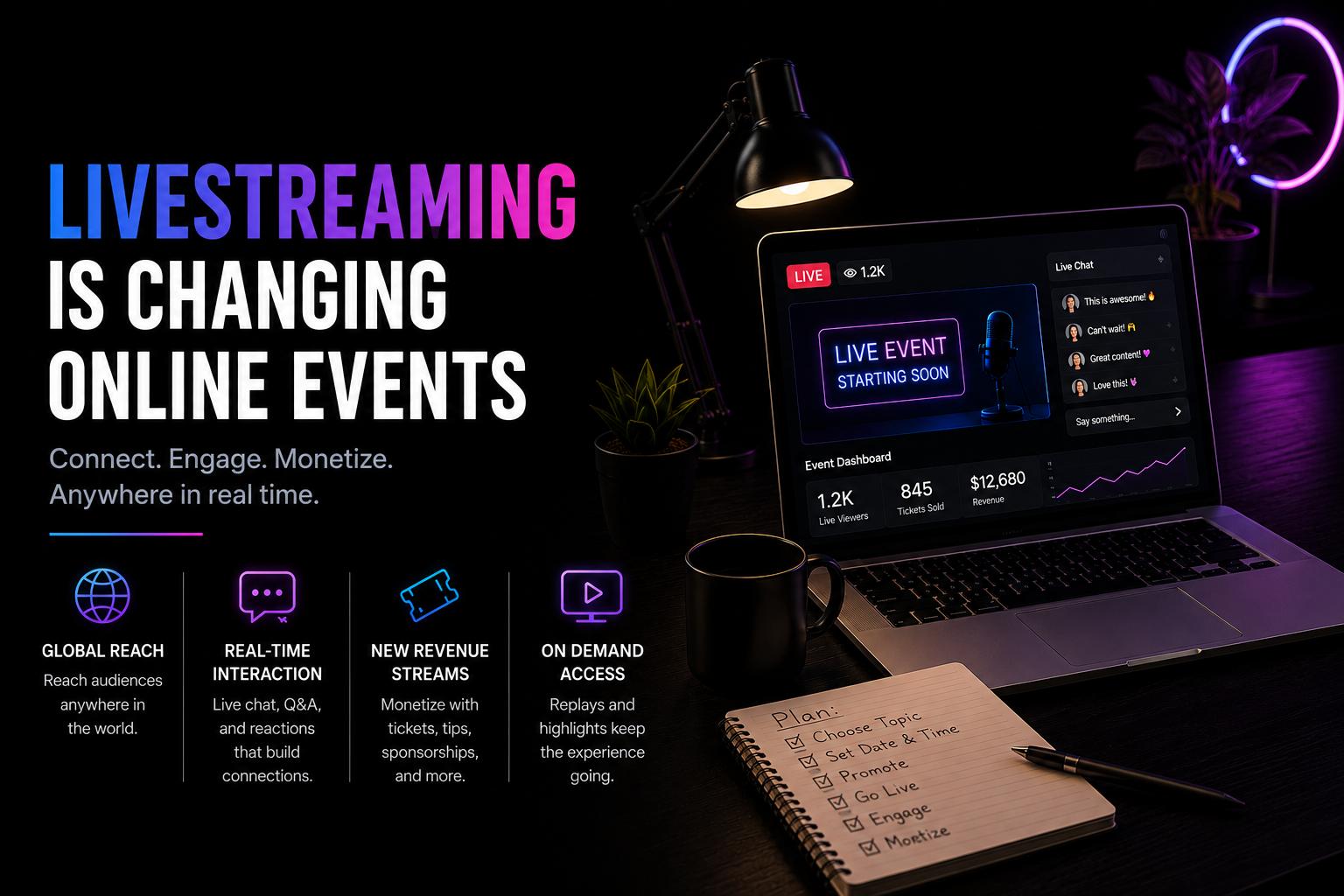
One of the biggest advantages of livestreaming is accessibility. People no longer have to travel to attend an event or be in the same city as the creator or organizer. A livestream can bring an event directly to viewers wherever they are.
Live streaming also creates something traditional recorded content cannot: real-time participation. Viewers can watch an event as it happens, interact with the host, and feel connected to the experience.
For creators and organizers, this means reaching a much larger audience without being limited by the capacity of a physical venue.
Livestreaming Creates New Revenue Opportunities
Livestreaming is not only about getting views. It can also create direct revenue opportunities.
Creators and event organizers can use pay-per-view livestreams to charge viewers for access to exclusive events. This can work well for special events, interviews, performances, behind-the-scenes experiences, educational sessions, and other content that gives viewers a reason to tune in live.
Platforms like BLIXE give creators and event organizers another way to turn livestreams into paid experiences and sell access directly to their audience.
Instead of depending entirely on advertising or sponsorships, creators can build a more direct connection between their content and the people watching it.
Who Can Benefit From Livestreaming?
Almost anyone with an audience and something valuable to share can use livestreaming.
Creators can turn exclusive experiences into ticketed events. Musicians can reach fans who cannot attend in person. Podcasters can broadcast special episodes and live interviews. Gamers can create events around competitions and special streams. Event organizers can extend physical events to audiences around the world.
Businesses can also use livestreaming for product launches, presentations, conferences, training sessions, and other digital experiences.
The key is giving viewers a clear reason to watch.
How to Make a Livestream Successful
A successful livestream starts before the broadcast begins.
Promoting an event early gives your audience time to learn about it and decide whether they want to attend. Your event page should clearly explain what viewers will get, when the livestream will take place, and how they can access it.
During the event, engagement is just as important. Interacting with viewers, answering questions, and creating memorable moments can make a livestream feel more personal than simply watching a recorded video.
After the livestream, highlights and short promotional clips can help keep the event alive and encourage viewers to watch a replay or discover your next event.
The Future of Online Events
Livestreaming is becoming more than another way to broadcast content. It is becoming a way for creators and organizers to build global audiences, create interactive experiences, and generate revenue directly from their viewers.
With platforms like BLIXE, creators can explore new ways to monetize livestream events while giving audiences access to experiences beyond the traditional venue.
The future of events may not be entirely online or entirely in person. Increasingly, it will be both with livestreaming connecting audiences to experiences wherever they are.